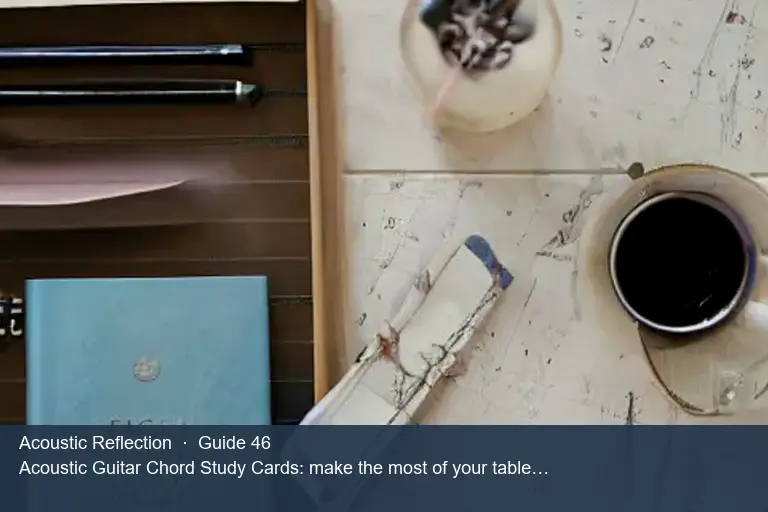
Acoustic Guitar Chord Study Cards: make the most of your table space — compact plan for a shared hobby space; setup in fifteen-minute sessions
In a shared hobby space, the acoustic guitar chord study cards can be a valuable tool to enhance your table space. By organizing these cards in fifteen-minute sessions, you can create a compact plan for a shared hobby space where you can easily access and learn new chords. Here’s a step-by-step guide to help you make the most of your table space for acoustic guitar chord study cards.
### Step 1: Preparation
Before you begin, prepare your table space with a clear layout. Arrange your guitar chord study cards on a flat surface, such as a table or a long wooden board. Make sure the cards are easy to access, so you don’t have to constantly flip through the cards to find what you need.
### Step 2: Naming the Cards
Label your cards clearly and systematically. Use a small, easy-to-read font, such as a pencil or a marker. For example, you could name each card with a short, descriptive title, like "C4" for C major, or "Dm7" for D major. This will make it easier to find the right chord when you need it.
### Step 3: Creating the Cards
Create the cards by writing the chord name in the center of each card, then filling in the rest of the card with the chord notation. For example, the "C4" card might have the chord name "C" in the center, and the rest of the card might say "4" for the fourth note (C4).
### Step 4: Stacking the Cards
Stack the cards in a way that they are easily accessible. For example, you can stack them in a triangular or square formation. This makes it easy to see the chord in a single swipe, and it also allows you to quickly access the next chord if needed.
### Step 5: Using the Cards
Once you’ve created your cards, you can use them to learn new chords. Simply take a card, read the chord name, and then look up the chord notation. This will make it easy to find the right chord when you need it.
### Step 6: Storing the Cards
Finally, store your cards in a drawer or a dedicated table space. This will ensure they are easily accessible when needed and make it easier to clean up after each session.
### Conclusion
By organizing your acoustic guitar chord study cards in fifteen-minute sessions, you can create a compact plan for a shared hobby space. This method makes it easy to access and learn new chords, and it also allows you to keep your cards organized and easy to access. With a little planning, you can enhance your table space and make the most of your acoustic guitar chord study cards.